
01
Tip count and size run set the tray
A ten-tip set and a twenty-four-tip set need different cavity layouts. The tray is cut to the count and to the largest tip, so the smaller sizes do not rattle in transit.
Industry
Colormix produces press-on nail packaging boxes in Guangzhou, China, from 500 pcs per size, with samples in 3–7 days and bulk in 15–22 working days after approval. The box is usually a rigid drawer or lid and base with a moulded tray cut to the tip count — ten, twelve or twenty-four — so the tips stay in order and the size range can be read before the box is opened.
Press-on nails ship as a set of sizes, and the packaging has two jobs at once: hold ten to twenty-four tips without letting them touch, and show the shapes before the box is opened. That is a tray problem first and a print problem second.
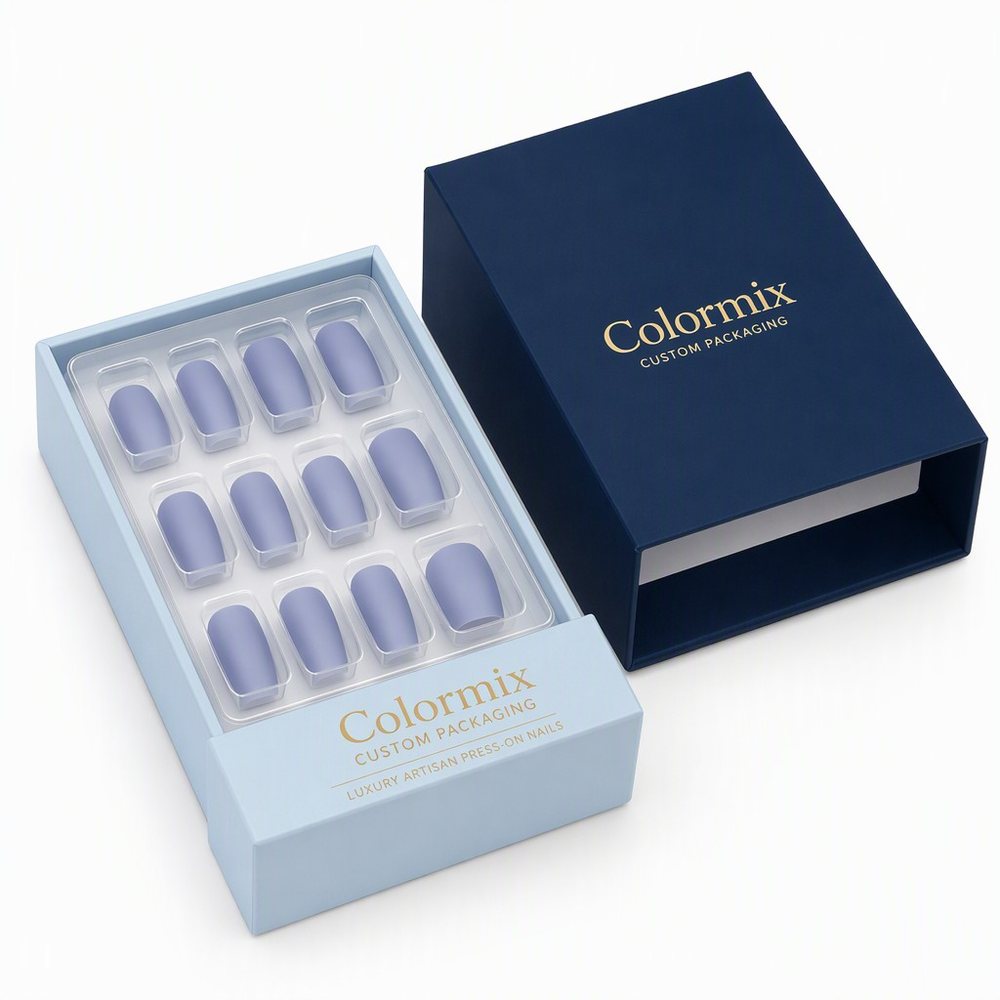
The same structure behaves differently across these three situations. They are the first we ask about.
Ten to twenty-four tips graded by size, in a numbered tray.
Count-based packs in a plain carton with the tray only.
Sleeve cartons for single sets sold online.
Three structures cover most briefs in this category. Each is quoted per size, from 500 pcs.
Sliding tray in a wrapped sleeve with a ribbon pull.
Two-piece box for larger sets with a moulded tray in the base.
300–350 gsm carton for marketplace despatch.
Four constraints drive most of the decisions here. They are the first things we ask about.
01
A ten-tip set and a twenty-four-tip set need different cavity layouts. The tray is cut to the count and to the largest tip, so the smaller sizes do not rattle in transit.
02
The tray material is chosen for grip: moulded PET holds the tip at the shoulder, pulp or EVA cushions it. A plain paperboard insert lets the tips migrate.
03
A retail set needs a window or an open-lid presentation. A salon refill is bought by count and usually ships in a plain carton with the tray only.
04
Ten sizes in one box is the usual complaint. Numbered cavities, a printed size card or a transparent lid window all fix it — but only before the artwork is finalised.
Most brands in this category need three or four of these, not one. Each is quoted separately.
| Component | How it is built |
|---|---|
| Rigid drawer box | Sliding tray inside a wrapped sleeve with a ribbon pull — the format most nail brands use for a retail set. |
| Lid and base box | Two-piece rigid box for larger sets, with the moulded tray set into the base. |
| Moulded tray | PET, pulp or EVA, cut to 10, 12 or 24 cavities, with numbered positions if the sizes are graded. |
| Size card | Printed card under the lid carrying the tip numbers and the shape names. |
| Sleeve carton | 300–350 gsm carton for single sets sold through marketplaces. |
Three finishes do most of the work here. The full library, photographed as macros, sits on its own page.
Mark and size range on a navy or pastel ground.
Velvet feel that matches the product category.
Shows the tips without opening the box.
Yes. If you already have the box, the moulded tray can be quoted separately, but it is still a tooling item and carries its own minimum.
Moulded PET grips the tip at the shoulder and is the usual choice. Pulp is the option when the range has to be plastic-free, and it needs a slightly deeper cavity.
Yes. A die-cut window with PET or PLA film over the tray shows the shapes without opening the box.
The cavities are numbered and the size card is printed to match. Tip dimensions come from your mould, not from an estimate taken off the artwork.
A paper seal or a printed band can be added to the quote. Shrink film is supplied by a separate converter, and we size the lid to allow for it.
Get a packaging quote
Product, channel, quantity and target date is enough to start. You get two or three options with the trade-offs, and an itemised quote.
Last reviewed: 2026-10-27